


0
Lucas Test Card 5 – Diagnosing Opus Electronic Ignitions
Lucas Test Card 5 helps in diagnosing Opus style electronic ignitions. Clicking the image will open a PDF.



Lucas Test Card 5 helps in diagnosing Opus style electronic ignitions. Clicking the image will open a PDF.
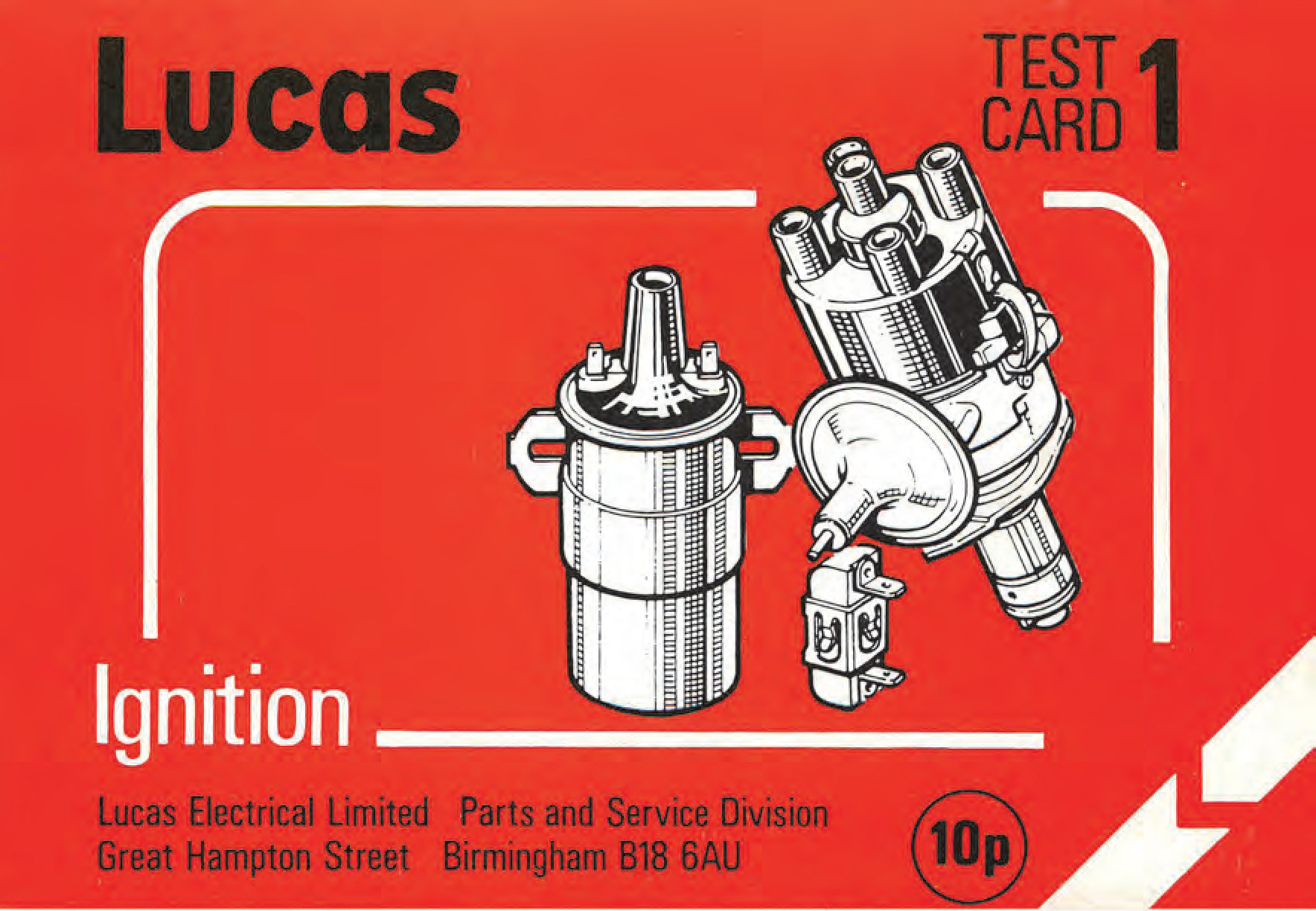
Lucas Test Card 1 helps in diagnosing high and low tension problems. Clicking the image will open a PDF.
Most of us think of car parts in terms of carburetors, engines, transmissions, brakes, and so on. The most common part in any car isn’t really noticed at all until you take one apart. Even then you don’t think much about it until it comes time to put the car back together again and, suddenly,…
We regularly receive questions relating to the demise of leaded gasoline and the effects of no-lead fuels on British sports car engines. Some years ago we addressed most aspects of this issue but since full solutions weren’t available at that time, (but are now) it’s appropriate to take a fresh look at a serious problem…
Stretched Head Studs? During an engine rebuild, be sure and check the condition of the head studs. They should be straight, with the threads clean and tight in the block. They should not have damaged threads or be “stretched”-this occurs after being torqued and re-torqued, used and re-used (a common event in a 30 year…
One of the simplest but most useful pieces of tune-up equipment is the cylinder-leakage tester. It can tell you if your engine has damaged valves, worn rings, a blown head gasket or a cracked block, thereby pinpointing compression leakage. The cylinder-leakage, or leak-down, tester operates on a simple principle: A cylinder with its piston at…
A “Knock Knock” That Was No Joke A knock in a worn engine is relatively easy to diagnose, but what about a knock in a freshly rebuilt engine? Especially one which has been assembled with great care in respect of bearing clearances and piston fit? We recently came across a very annoying problem which had…
The “obsolete” hand crank (or “starting handle”) is still a valuable tool for turning an engine over slowly to adjust valves, point gaps, and even to start the engine when all else fails. While hand cranking an engine is not difficult, it is often frustrating and can be dangerous if the following procedures are not…
BMC “Confidential Service Memorandum” 16 June 1961. Oil Filter Overtightening the filter center fixing bolt can cause the cause rubber seal (joint ring) to split with consequent oil leakage. When replacing an element, the center bolt should be tightened to a maximum torque figure of 15 lbs. ft. (2.08 kg. m.).
Perhaps the most annoying source of oil leaks in older British sports car engines is the mechanical oil slinger/seal arrangement designed as the primary rear crankshaft seal. The theory of this archimedes-principle seal, is that the spiral grooves at the back of the crank fit with only a slight clearance to the stationary upper and…